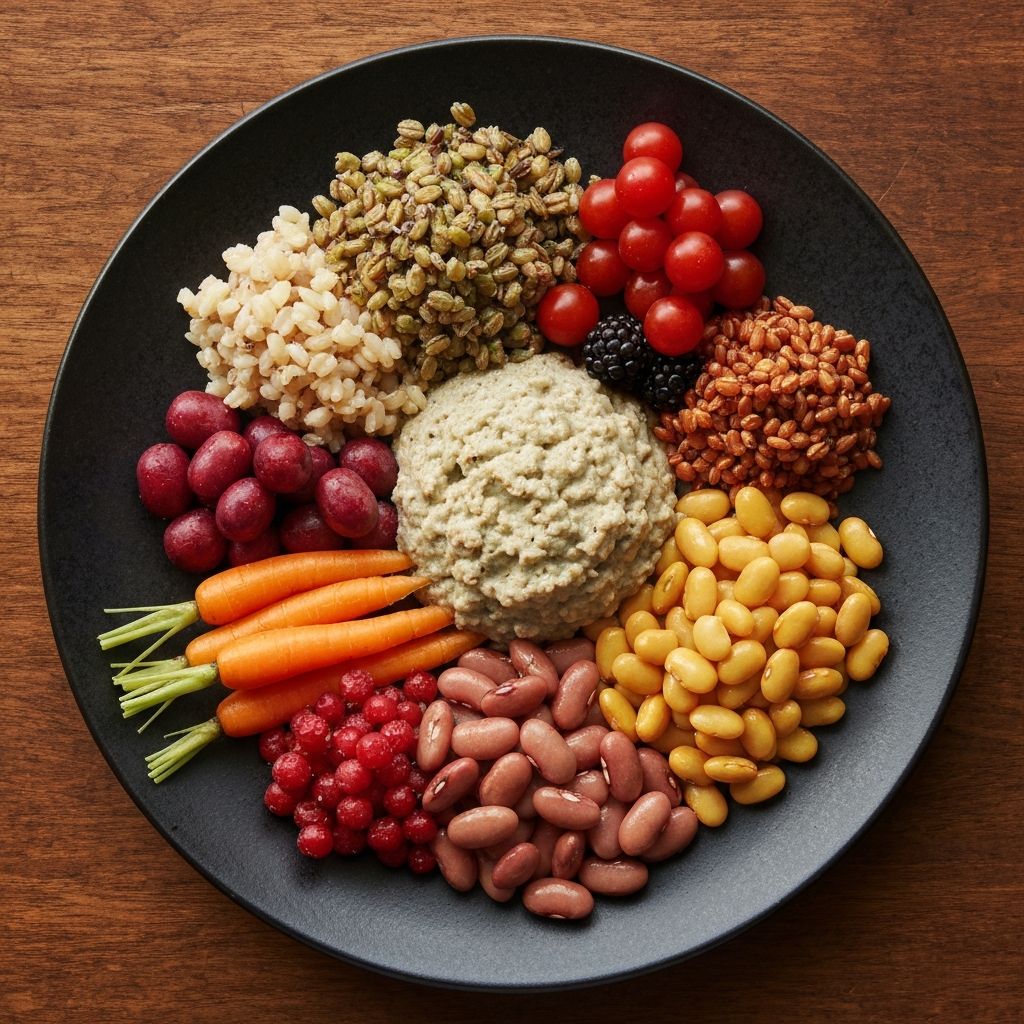
General Insights into Core Nutritional Principles
This section presents explanations of foundational nutritional concepts — the principles that researchers and food scientists use to understand how food and eating patterns relate to human biology. No individual guidance is offered; the content is strictly contextual and informational.
Updated: March 2026 — Nqerion Informational Resource
The Concept of Variety in Food Consumption
Variety in food consumption is a principle discussed throughout nutritional science literature, founded on the observation that no single food contains all the nutrients required for normal human physiological function. Different foods — even within the same broad category — provide different combinations and concentrations of nutrients, meaning that a narrow range of food choices is likely to produce a correspondingly narrow nutritional profile.
The biological basis for discussing variety stems from the diverse nature of the nutrient requirements of the human body. Vitamins and minerals are required in specific forms and from specific sources; amino acids come in different combinations from different protein foods; fatty acids differ in structure and function; and phytochemicals are distributed unevenly across the plant kingdom. Consuming a wide array of foods from different categories — vegetables of varying colours, different types of grains, multiple legume varieties, diverse fruits — is one way in which nutritional science frames the practical challenge of obtaining the full range of known required compounds.
In research contexts, dietary variety is often assessed using indices that score the breadth of food group coverage within a person's or population's intake pattern. These indices are used descriptively to characterize dietary habits, not as individual prescriptions.
- Different colours in vegetables and fruits reflect different phytochemical profiles, studied for their distinct biological activities in nutritional biochemistry.
- Different grain species (wheat, rice, oats, barley, quinoa, amaranth) have distinct amino acid compositions and fibre types.
- Different cooking methods applied to the same food can influence which nutrients are available for absorption.
- Cultural food traditions around the world have, over millennia, arrived at diverse food combinations that nutritional science now studies for their compositional properties.
Understanding Food Labelling: A Framework for Reading Nutritional Information
Food labelling is a regulatory and consumer information system that presents standardized nutritional data about packaged food products. Understanding what these labels contain and how they are constructed is an area of general nutritional literacy discussed extensively in public health nutrition and food policy contexts.
In most regulatory frameworks, a standard nutritional information panel includes data on energy content (expressed in kilocalories and/or kilojoules), and the quantities of macronutrients per serving and per 100g or 100ml. The standard components typically listed are: total fat (and, where applicable, of which saturated fats and trans fats), total carbohydrates (and, of which sugars), dietary fibre, protein, and sodium. Some panels also include information on selected micronutrients.
Key Elements Typically Present on Food Labels
- Serving size: The quantity for which the nutritional data is calculated. Total package contents may include multiple servings; nutritional figures must be multiplied accordingly for whole-package consumption.
- Energy: Expressed in kilocalories (kcal) and often also in kilojoules (kJ). Energy is derived from the oxidation of macronutrients: approximately 4 kcal/g from carbohydrates and proteins, and approximately 9 kcal/g from fats.
- Carbohydrates (total and of which sugars): The "sugars" subcategory refers to mono- and disaccharides combined; it does not distinguish between naturally occurring and added sugars unless separately declared.
- Fats (total, saturated, trans): Saturated and trans fat content are typically separated from total fat on modern label formats.
- Dietary fibre: Not always mandatory in all jurisdictions; where present, it provides information about the fibre content per serving.
- Protein: Expressed as grams per serving. Label data does not convey information about amino acid completeness or digestibility.
- Sodium: Expressed as milligrams per serving. Sodium is present in table salt (sodium chloride) and in many other food additives.
- Ingredients list: Listed in descending order by weight, this section describes the composition of the product. The first ingredient is present in the largest quantity by weight.
Food labels present information about the composition of a product at a single point in time and under standard measurement conditions. They do not convey information about how nutrients will interact within a meal context or how their bioavailability will be influenced by other dietary factors. Labels are most usefully understood as one data source within a broader framework of nutritional literacy.
Portion Awareness: The Concept of Mindful Engagement with Food
Portion awareness refers to an orientation toward food consumption in which the individual maintains conscious attention to the quantities and characteristics of what is being consumed. As a concept, it is discussed in behavioural nutrition and mindful eating research — the latter being an area that examines how psychological and attentional states during eating may interact with digestive and satiety processes.
The concept does not prescribe specific serving sizes or caloric targets. Rather, it addresses the manner in which food is encountered: the pace of eating, the degree of sensory engagement with food, and the awareness of physiological cues during and after eating. Research in this area explores how attentional engagement during meals interacts with the hormonal and neurological signals that the body uses to regulate energy balance.
Portion sizes, as studied in nutritional epidemiology, have been observed to vary considerably across different cultures, food environments, and historical periods. The standardized "serving sizes" used on food labels are regulatory constructs designed for comparative labelling purposes and do not necessarily correspond to typical consumption quantities.
Concepts Discussed in Portion Awareness Research
- Satiety signals: The physiological cues — hormonal and neurological — through which the body communicates the state of fullness to the brain. These signals operate on a time delay, meaning that the perception of fullness typically follows actual nutrient intake by a period of several minutes.
- Eating rate: The speed at which food is consumed has been studied in relation to the timing of satiety signalling; this is an area of ongoing research in behavioural nutrition.
- Sensory-specific satiety: A phenomenon in which the palatability of a specific food decreases after it has been consumed in quantity, while other foods may remain appetizing — observed in studies of eating behaviour.
- Environmental cues: Research has examined how external factors — plate size, portion presentation, social context, and ambient environment — may influence the quantity of food consumed, independently of physiological hunger state.
Cooking Methods and Their Nutritional Significance
The method by which food is prepared has been extensively studied in food science and nutritional biochemistry for its effects on nutrient content, bioavailability, and the formation of new compounds. The relationship between cooking and nutrition is not straightforward: different methods have varying effects on different nutrients, and in many cases the same cooking method may increase the availability of some nutrients while reducing others.
Understanding how preparation methods interact with nutritional properties has been a consistent area of academic inquiry, particularly in the context of comparing traditional preparation practices across cultures with the nutritional outcomes observed in populations following those traditions.
Boiling and Steaming
Boiling in water is one of the oldest and most widely used cooking methods. Water-soluble vitamins — including vitamin C and several B vitamins — are reduced by boiling, as they leach into the cooking liquid. The extent of this loss is influenced by the volume of water used, cooking time, and whether the cooking liquid is consumed. Steaming, which exposes food to heat without direct water contact, has been studied as a method associated with lower losses of water-soluble vitamins relative to boiling.
Roasting and Dry Heat Methods
Roasting and dry heat methods (grilling, baking) involve temperatures high enough to produce the Maillard reaction — a complex chemical interaction between amino acids and reducing sugars that produces the characteristic browning and flavour development in cooked foods. At very high temperatures or prolonged cooking times, some vitamins (particularly B vitamins and vitamin C) are reduced. However, dry heat methods do not cause the leaching losses associated with boiling.
Fermentation
Fermentation is a transformation process that has been practiced across virtually all human cultures for millennia, including extensively in Peruvian and broader Andean traditions. Microbial activity during fermentation breaks down carbohydrates, proteins, and phytic acid (an antinutritional factor that inhibits mineral absorption from plant foods). The reduction of phytic acid through fermentation can increase the bioavailability of minerals such as iron, zinc, and calcium from fermented grain and legume products.
Soaking and Sprouting
Soaking grains and legumes in water before cooking is a traditional preparation practice that has been studied for its effects on antinutritional factors. Like fermentation, soaking can reduce phytic acid levels and the concentrations of certain other compounds that affect mineral bioavailability. Sprouting — the process of allowing grains, legumes, or seeds to begin germination — further activates enzymatic processes within the grain itself that break down storage forms of nutrients and antinutritional factors, altering the nutritional profile of the food.
- The cooking method selected interacts with the specific food being prepared; no single method is uniformly superior for nutrient retention across all food types.
- Traditional food preparation practices from diverse cultures have, through centuries of practical experience, often developed methods that align with findings from modern nutritional biochemistry.
- Combining foods within a meal can influence the bioavailability of nutrients from each component — for example, the presence of vitamin C-rich foods alongside iron-containing plant foods is studied for its effect on iron absorption.
Seasonality and Local Sourcing in Nutritional Context
The concept of seasonality in food production refers to the natural cycle of availability of fresh produce as determined by agricultural growing seasons. Most fruits and vegetables are produced within specific seasonal windows in a given geographic region, outside of which they may either be unavailable locally or sourced from distant locations or storage.
From a nutritional science perspective, the relationship between seasonality and nutrient content has been studied in the context of freshness and post-harvest nutrient degradation. Some nutrients — particularly certain vitamins — are known to decline gradually after harvest, meaning that the time between harvest and consumption can influence the nutritional profile of fresh produce. Extended storage and long-distance transport, which are often associated with out-of-season produce, have been studied in this context.
Local sourcing — obtaining food from within a geographically proximate area — is discussed in food systems research both in nutritional contexts (shorter time from harvest to consumption) and in environmental sustainability contexts (reduced transportation-associated environmental impact). Peru, as one of the world's most biodiverse agricultural nations, has a particularly rich tradition of locally sourced varieties of crops — including hundreds of potato varieties, diverse quinoa strains, and a wide range of native fruits and vegetables — many of which are studied in food science for their distinct nutritional profiles.
- Seasonal produce, consumed shortly after harvest, may retain higher concentrations of certain heat-sensitive and oxidation-sensitive vitamins than equivalent produce that has been stored or transported for extended periods.
- The nutritional diversity available through seasonal eating naturally varies across the year, introducing a temporal dimension to dietary variety.
- Traditional food cultures in Peru and across Latin America have historically relied on seasonal and locally available produce, with food preservation methods — including drying, fermentation, and freeze-drying (as in the case of traditional Andean chuño) — developed to extend food availability across seasons.
- Nutritional research increasingly incorporates food systems perspectives, recognizing that how food is grown, transported, and distributed has implications not only for environmental outcomes but also for the nutritional characteristics of food at the point of consumption.
General Patterns in Nutritional Research: An Overview of Dietary Frameworks
Nutritional science approaches the study of diet not only at the level of individual nutrients but also at the level of dietary patterns — the overall configuration of food and nutrient intake across a population or individual over time. This population-level perspective has become increasingly prominent in nutritional epidemiology, as researchers have recognized that the effects of specific foods and nutrients cannot be fully understood in isolation from the dietary context in which they appear.
The Mediterranean Dietary Pattern
The Mediterranean dietary pattern is one of the most extensively studied dietary configurations in nutritional epidemiology. It is characterized, in its traditional form, by high consumption of vegetables, fruits, legumes, whole grains, nuts, and olive oil; moderate consumption of fish and fermented dairy products; and lower consumption of red meat. It developed across the coastal regions of the Mediterranean basin and has been studied in prospective cohort studies for several decades. It is discussed in nutritional science as a pattern, not a prescription, and the populations studied within it represent diverse cultures, food traditions, and agricultural environments.
Plant-Predominant Patterns
Plant-predominant dietary patterns — those in which the majority of energy and nutrients are derived from plant sources — represent a broad spectrum ranging from patterns that include small quantities of animal products to fully plant-exclusive patterns. They are studied in nutritional science for their distinctive nutrient profiles, with particular research attention to the sources of protein, vitamin B12, iron, calcium, zinc, and long-chain omega-3 fatty acids in the absence or reduction of animal-derived foods. The nutritional research literature on plant-predominant patterns has expanded considerably over the past two decades.
Traditional Andean Dietary Patterns
Traditional dietary patterns from the Andean region — including Peru's own rich agricultural and culinary heritage — represent an important area of ethnobotanical and nutritional research. The Andean region is recognized as one of the primary centres of crop domestication in human history, having given rise to potatoes, quinoa, amaranth, many varieties of beans, and numerous other crops now consumed globally. Traditional Andean food practices have been studied for their reliance on diverse, locally grown plant crops, traditional preparation methods such as freeze-drying (chuño), fermentation, and toasting, and the combinations of foods developed over millennia of agricultural practice in high-altitude, Andean ecosystems.
These traditional patterns represent a form of applied nutritional knowledge accumulated through generations of lived experience, and they are increasingly studied by nutritional scientists seeking to understand the relationships between traditional food cultures and nutritional outcomes in indigenous and rural Andean communities.
Explore Related Topics
The principles discussed on this page connect to broader topics covered elsewhere on this resource. Explore the following areas to deepen contextual understanding.
Macronutrients
A detailed overview of carbohydrates, proteins, and fats — their chemical structures, food sources, and the ways in which they have been studied in nutritional science.
Explore TopicScience of Digestion
An overview of the digestive process — from ingestion to absorption — and the role of the gut microbiota in interacting with dietary fibre and other food components.
Explore TopicCultural Perspectives
A contextual examination of how different cultures, including Peru's own rich food traditions, have approached food selection, preparation, and the cultural dimensions of eating.
Explore TopicEditorial Note
All content on this page is presented for informational and educational purposes only. Nqerion does not provide personal dietary guidance, and nothing on this page constitutes nutritional or individualized guidance of any kind. For questions relating to personal health or diet, consult a qualified professional. See our Health Disclaimer for full details.